
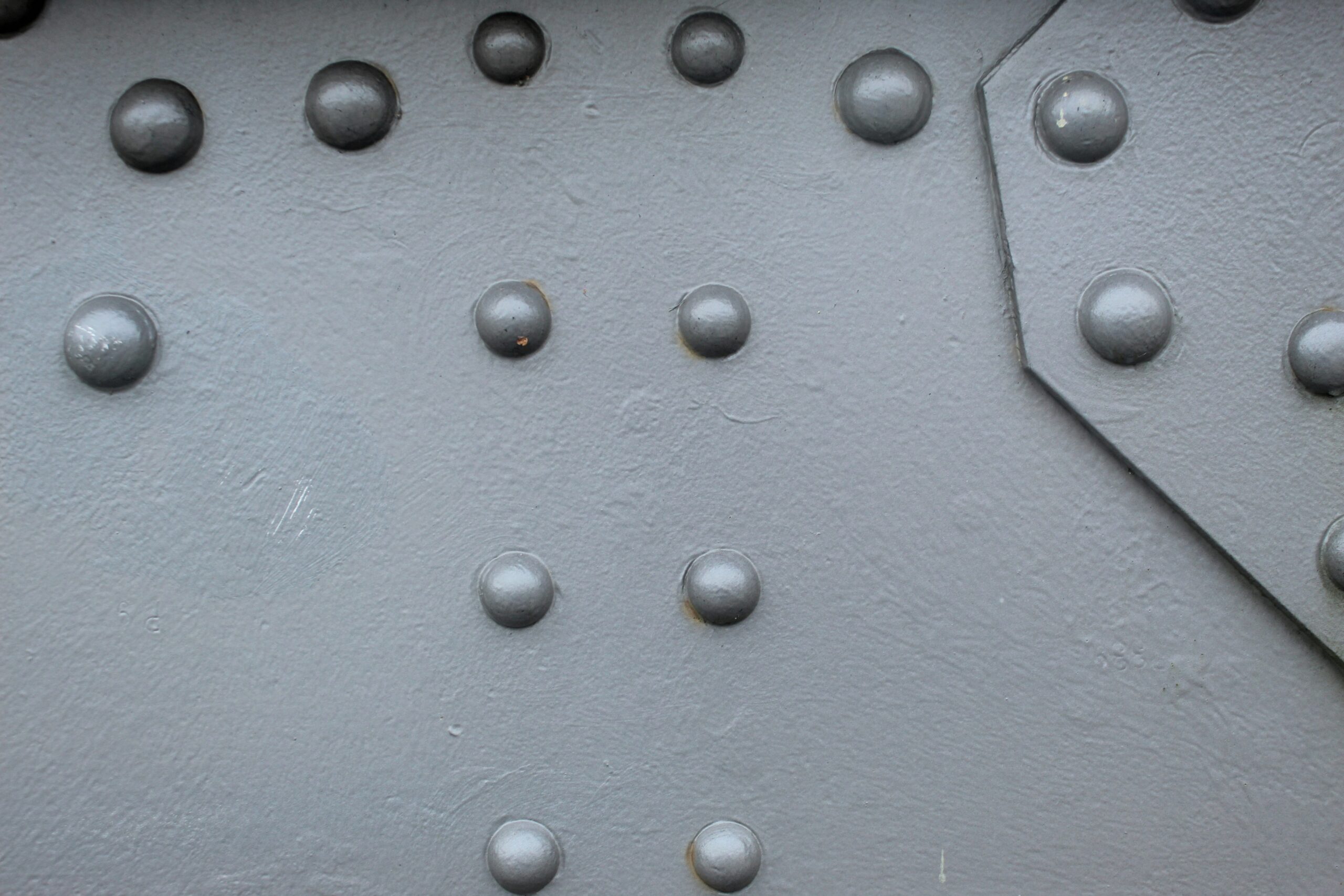
The Engineering Behind Clamping Force: Why Some Joints Fail Under Dynamic Loads
The Engineering Behind Clamping Force: Why Some Joints Fail Under Dynamic Loads
Many times when a joint fails and you blame a "weak bolt" or "bad steel," the fastener is the strongest link in the joint. It doesn’t actually break. What actually happens is that preload, the force holding the joint together, bleeds away until the friction can no longer hold shear and starts the joint moving. Once the joint moves, fatigue takes over.
Clamping force is the joint, not the fastener
A bolt or rivet does not keep a joint intact because it’s strong. It keeps the joint together by pressing the clamped materials so tightly that friction resists any slippage between the plies. This pressing force is called clamping force, and it’s established as soon as a fastener is tightened or assembled to its final structure.
This is important because there are situations when engineers approximately size fasteners through shear strength only, assuming that the bolt is supporting the load. In a well-clamped joint, the fastener is not responsible for supporting shear load directly. The friction produced by clamping force performs this function. The shear strength is a backup for the fastener, but it is not its main structural support. When clamping force decreases, the joint no longer functions as a solid connection and starts to function as two plates weakly fastened together, in which case shear load is supported by the fastener body directly. This is something the fastener was not designed to resist long-term.
Static loads are easy. Dynamic loads are the real test.
Static loading is straightforward. Dead weight, a fixed structural load, a beam sitting under its own mass – these are calculable and predictable, and a joint designed for them rarely surprises anyone. Dynamic loading is a different problem entirely.
Wind shear on a tower, seismic movement, vibration from heavy machinery, cyclic traffic loading on a bridge deck – these forces don’t just load a joint once. They load it thousands or millions of times, in fluctuating directions, often at frequencies that resonate with the structure itself. A joint that holds fine under a single static test can degrade steadily under cyclic load until it fails at a fraction of its rated capacity. This is fatigue failure, and it’s one of the more common ways dynamic-load structures actually go wrong in the field, not through a single catastrophic overload but through thousands of small cycles that each shave a little more life off the joint.
Why vibration loosens threaded fasteners
Standard threaded bolts fail under dynamic load in a fairly specific way. A tightened bolt is essentially a stretched spring, storing elastic energy along its shank. That stored energy is what generates clamping force in the first place.
Under transverse vibration – forces acting sideways across the joint rather than along the bolt axis – the clamped plies can momentarily shift relative to each other. That shift briefly reduces friction between the thread flanks and under the bolt head. For a fraction of a second, the thread interface has less resistance to rotation than usual. The stored elastic energy in the bolt takes advantage of that moment and releases a tiny amount of rotation. The bolt backs off, just slightly. Repeat that thousands of times under sustained vibration, and the bolt walks itself loose without anyone touching it. This is vibration loosening, and it’s a mechanical certainty for threaded fasteners in the wrong environment, not a manufacturing defect.
The problem is baked into the geometry. Any fastener that relies on a helical thread to generate and hold clamping force has a built-in path for that force to reverse. The thread that lets you tighten it is the same thread that lets it walk back out.
The torque you apply isn’t the clamping force you get
What surprises people unfamiliar with fastener engineering is that most of the torque applied to a standard bolt doesn’t even become clamping force. According to the mechanical engineering handbook, between 85% and 90% of the torque applied to a threaded bolt is gobbled up by friction under the bolt head and between the threads, with only 10% to 15% of that converting to actual, usable preload. It would be more proper to say that torque is an indirect and pretty rough estimate of clamping force, not a direct measurement of it. Two bolts torqued identically – with just slightly different surface conditions, lubrication, or thread wear between them – can have meaningfully different actual clamping forces. In a static application that variance might be fine. In a joint subjected to dynamic load for twenty years, that’s a real liability, because the bolts closest to the low end of that variance are the ones that lose preload the fastest and start the loosening cycle.
Permanent fasteners remove the failure path entirely
Once you understand that the helical thread is the source of vibration loosening, the fix is simple: get rid of the thread.
Non-threaded, mechanically permanent fastening systems do not use a rotational path to create or maintain clamping force. A pin-and-collar system, for example, is installed through swaging – a cold-forming process where a collar is forged directly into machined grooves on the pin. There is no thread to back out along, no rotation for stored energy to exploit. The clamping force is sealed in mechanically at installation and stays put, because there’s no avenue for it to escape.
That’s why high-vibration construction applications, all of which have a weight limit and a fixed budget, demand substitute elements like heavy-duty Structural Rivets – they deliver the predictable, permanent clamping force that a thread cannot. It’s not a matter of what you like more. It’s a response to the science: if rotation is the problem, and there’s no rotation, the problem is solved.
Hole-fill matters more than people think
Another factor often left out of the discussion when making fastener choices is the all-important "hole-fill" that occurs when a fastener is installed. Standard bolts are installed into a clearance hole slightly larger than the fastener shank, because you need clearance to insert the thing. That gap, even a small one, allows micro-movement under load. Every cycle of dynamic force lets the fastener shift fractionally inside the hole. Over time, that micro-movement wears the hole itself, elongating it slightly, which increases the gap further and accelerates fatigue cracking around the hole edge.
Certain permanent fastening systems, structural rivets among them, expand radially during installation and fill the clearance hole completely. There’s no gap left for micro-movement to occur in. This is a meaningfully different mechanical situation from a bolted joint with clearance, and it’s part of why permanent systems tend to outperform threaded ones in joints that see continuous cyclic load rather than occasional static stress.
Thermal cycling adds another layer of degradation
Outdoor construction is more challenging for structures than indoor construction in terms of thermal cycling as a factor – steel contracts and expands with temperature changes. If the fastener and the clamped material have different characteristics in this regard, or if they are the same but one or the other is heated by exposure to the sun, the joint is constantly dealing with tiny changes in preload as it shrinks and expands.
Thermal cycling itself is not usually a fast or direct killer of joints as they have a lot of preload to lose before it becomes a problem. But, as with any issue that slowly bleeds off preload, a joint running close to minimum preload will lose protective preload margin much faster under thermal cycling stress.
Galvanic corrosion is worth mentioning here too, since outdoor construction frequently mixes metals. When dissimilar metals sit in contact with an electrolyte present – rain, humidity, salt air – an electrochemical reaction degrades the joint from the inside. Combined with thermal cycling and vibration, corrosion accelerates the whole failure sequence, weakening the fastener at exactly the moment the joint has the least reserve capacity to spare.
How to actually inspect a dynamic joint
Field inspection provides a concrete view of the difference between threaded systems and permanent mechanical fasteners. A torque wrench check gives you an idea of the torque required to turn a fastener slightly, which is an indirect measurement and a relatively poor indicator of existing clamping force. It’s an imprecise, operator-dependent number and doesn’t consider the friction losses discussed earlier.
Permanent mechanical fasteners provide a far better solution: you can see that the device has been properly installed. A correctly swaged collar displays a characteristic deformed outline. If the collar hasn’t been formed, that’s blatantly obvious; if doubt exists about whether proper clamping force was achieved during installation, there’s no room for doubt in post-construction inspection. For a structural engineer signing off on a joint with a service life in a high-vibration environment, that makes torque far less appealing as an inspection criterion. It tells you what you wanted to know about the moment of installation, but not about the life of the unit.
Joints don’t usually fail because someone picked a weak fastener. They fail because clamping force, once established, is treated as permanent when it isn’t. Dynamic loads specifically target the mechanisms that hold preload in place, and threaded fasteners have a built-in vulnerability to exactly that kind of attack. Engineering a joint for a high-vibration environment means engineering for clamping force retention over the full service life, not just the torque spec written on day one.