
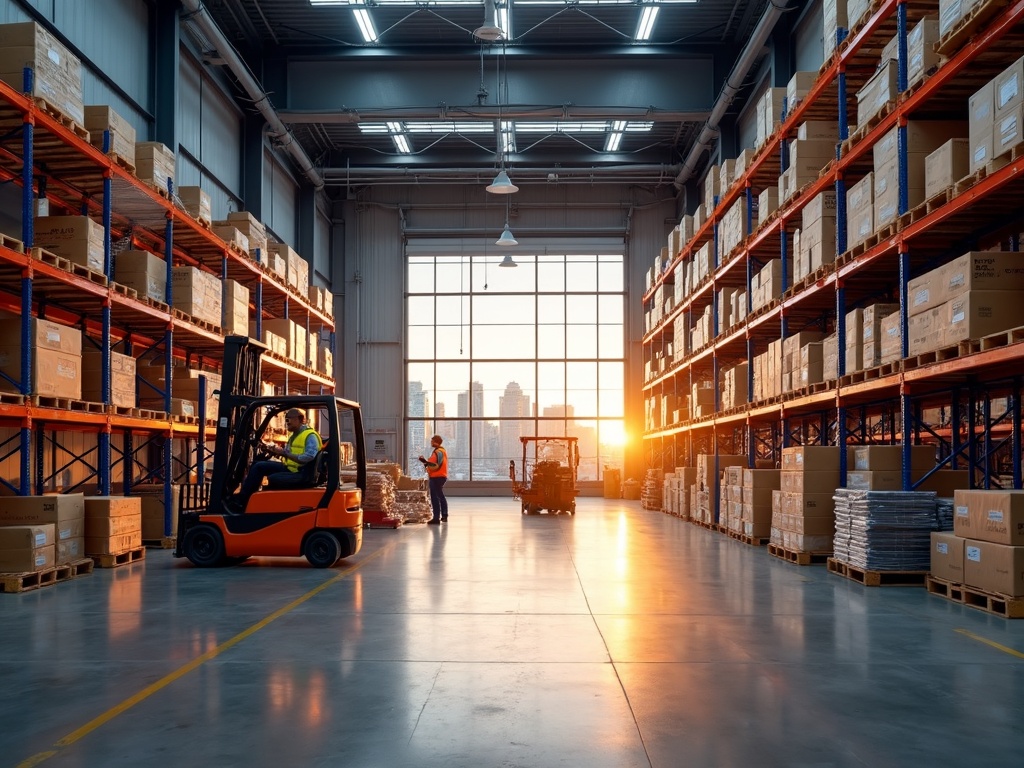
The Real Cost of Warehousing In-House vs. Outsourcing to a 3PL
The Real Cost of Warehousing In-House vs. Outsourcing to a 3PL
When businesses consider all factors, warehousing in-house seems to make more sense. A business owns the space, has access to and control over the stock, and everything is at hand, ready to go. However, when businesses evaluate what warehousing costs them, beyond the rent, instead factoring in time, staffing, systems, lost opportunities, actual costing, many come to the conclusion that in-house warehousing presents complications and expenses too high to maintain.
This is not a question of which model is better at all times; it’s a question of determining what you’re paying for and whether you’re receiving reimbursement value.
The Cost of Running Your Own Warehouse
When determining obvious expenses, it’s easy to categorize. There is the rent or mortgage payment on the space, utilities, insurance, shelving and racking needs within the space, and any necessary wages for anyone working in the warehouse. This is a significant fixed expense, compounded monthly regardless of how much stock moves.
Where things get complicated is that many of the actual expenses are not line items. For example, business owners must spend time managing warehousing staff to ensure projects move forward instead of growing their businesses. They must subscribe to software systems that track inventory and waste time on stock-checks. They incur additional costs due to mistakes (the wrong item sent, misplaced product, returns lost in the shuffle). These may not appear on a balance sheet but certainly impact cash flow.
Furthermore, a space that is appropriately sized now will be too small tomorrow when there’s a large sale season on; it’s too big when trends go down because fixed space means fixed costs.
What Outsourcing Really Means in Operation
When a business outsources its fulfilment to a third party, the situation fundamentally changes since costs are not incurred unless space and staffing are necessary. Instead of staffing someone all year round for occasional stock necessity and sporadic shipping activity, the costs incurred reflect how many goods are stored, how many orders are processed, and how many items are shipped. For businesses with seasonal demands or uncertain growth, this makes a world of difference.
Thus, businesses exploring this model typically explore 3pl warehousing melbourne at first, since getting in good with a reputable provider who already has infrastructure established prevents excess capital investment in establishing that capability on their own from the ground up.
In addition, a significant change that comes as a surprise is how much operable complexity no longer exists. The provider must staff, train, comply with internal orders and maintain equipment, none of this becomes the client’s problem. Instead, the client can focus on what it does best: selling, developing products, and building customer relations.
Where Things Start To Get Comparable
The accounting numbers may not tell the whole story. If a business has good volume year-round and good space-saving systems in place, they may find no reason to sub out fulfilment since keeping it in-house is genuinely cost-effective. However, for small-to-mid-sized businesses, honest comparison reveals that in-house warehousing often comes with hidden costs that render initial numbers moot since it’s more expensive than it appears.
For example, returns take time; they take space; they take effective organization. Many businesses underestimate how much labor their employees get devoted to handling returns that they could do quicker without infractions for customers as 3PL organizations specialized in processing returns as they have established protocols for quick turnaround without burden to the overall business.
Another glaring hole where expenses exist is technology. Modern fulfilment requires inventory systems that link up with sales platforms, provide stock visibility in real-time and develop reports that matter to owners. Buying this technology is expensive; it’s almost always included with an established 3PL provider’s resources.
The Scalability Factor
Probably the biggest reason to outsource your needs comes when you’re no longer small. With in-house warehousing the moment a business expands or contracts it creates significant problems; expansion means re-negotiating space, hiring more manpower and acquiring more shelving/racking; contraction is even worse because you can’t just drop employees or eliminate leases overnight.
A 3PL situation works in tandem with your business; a successful product launch or seasonal spike or unintended surge in product need gets absorbed by the provider so a client doesn’t have to change its operational dynamic every single time something new comes up. While this may be difficult to put a quantifiable value on it matters immensely for growth-minded ventures that don’t have time for constant re-evaluations.
Conclusion
There is no right or wrong answer here; businesses with specialized storage needs that foster very high margins or otherwise need to keep fulfilment closely will be better situated keeping things in-house however those situations are rarer than people realize.
For small businesses looking to grow and scale, while keeping their capital liquid for purposes that generate direct revenue instead of tying up money in overhead, they need to consider using a 3PL provider when appropriate since keeping things in-house isn’t just expensive from what one can see each month; it’s everything else that’s seemingly free until nothing is ever free again.